
Hi, I’m Erin — personal stylist and holistic style coach based in Austin, TX. I help you elevate your wardrobe in a way that’s sustainable, intentional, and uniquely you. I know firsthand how powerful it is to dress in a way that reflects who you truly are, and I love helping others infuse their personality into every look. If you’re ready to build a wardrobe that’s thoughtful, beautiful, and better for the planet—you’re in the right place.
Let’s get into it! Prefer to watch? Check out the video here.
A Style Coach Heads to New Orleans…
I’m headed out for a girls’ trip to New Orleans over Memorial Day weekend, and while I’m super excited for good food, live music, and the vibes—I’m also bracing myself for the humidity. New Orleans in late May is no joke, and since it tends to be even more humid than Austin, I’ve had to be especially thoughtful when packing.
This week’s video is all about how to dress for hot, humid climates—covering both the best and worst fabrics as well as the most comfortable silhouettes to help you stay cool and confident in the heat. We’ll start with the most sustainable fabric options, work our way down to what to avoid, and then I’ll walk you through a few hot weather outfit formulas.
Best Fabrics for Hot, Humid Weather (Starting with the Most Sustainable)
1. Ramie
Ramie is one of the oldest natural fibers in the world—and a total MVP in humid climates. It absorbs up to 12 times its weight in water, resists bacteria and mildew, and has a naturally open weave that keeps air flowing. It’s breathable, durable, and naturally cooling—basically everything you want when you’re battling heat and sweat.
2. Linen
Classic, breathable, and oh-so-sustainable (especially undyed or unbleached linen). Linen is moisture-wicking, gets softer with each wash, and allows your body to breathe. The only downside? It wrinkles easily, but I consider that part of the charm.
3. Lyocell (TENCEL™)
Lyocell is a semi-synthetic made from eucalyptus in a closed-loop system, meaning the solvents used to make it are reused and don’t end up polluting the environment. It’s incredibly soft, antibacterial, anti-static, and thermoregulating.
4. Cupro (aka Bemberg)
Cupro is made from cotton linter, a byproduct that would otherwise be waste. It feels like silk, is hypoallergenic, and is often considered a vegan alternative to silk. Great for sensitive skin and stunning drape.
5. Recycled Cotton
Recycled cotton bypasses the water- and chemical-intensive process of farming virgin cotton. I especially love it in gauzy textures or fabrications like seersucker or piqué—textiles that naturally lift off the body and keep airflow moving.
6. Regenerative Cotton
This takes sustainability up a notch. Grown using practices that restore soil health and increase biodiversity, regenerative cotton supports both your body and the Earth.
7. Organic Cotton
No pesticides, no synthetic fertilizers—just cotton grown the way nature intended. Lightweight, breathable, and versatile, especially in looser silhouettes.
8. Modal
Made from beech trees and completely biodegradable, Modal is super soft, breathable, odor-resistant, and doesn’t shrink or lose its shape. It feels like cotton with a touch of luxury. It isn’t an inherently eco-friendly fabric. Not all manufacturers do the work. Make sure you do your due diligence and research the company before buying new!
9. Merino Wool
Yes, you read that right! Merino is actually great at regulating temperature, wicking away moisture, and resisting odor. That said, it’s not everyone’s favorite in hot weather, as it can feel itchy when you’re already sweaty. Proceed with caution.
10. Silk
Silk has a natural cooling effect and is both antimicrobial and moisture-wicking. It’s gorgeous and luxurious, but be aware that it stains easily, and traditional silk production often involves killing the silkworm. Look for peace silk if you prefer a more ethical version.
11. Rayon and Viscose
These feel amazing in the heat—lightweight, drapey, and breathable—but are usually made using harsh chemicals in non-closed-loop systems. If you’re going this route, buy secondhand. Otherwise, opt for Lyocell or Cupro for similar benefits with a lower impact.
Worst Fabrics for Humid Weather
Let’s talk about what to avoid at all costs when the air feels like soup:
- Polyester – Traps heat, repels moisture (so sweat sticks), and holds odor.
- Acrylic – Not breathable, pills easily, and can melt at high temps.
- Nylon – Clings to your skin, retains odor, and gets swampy real fast.
Not only are these synthetic fabrics miserable in hot weather, they’re made from fossil fuels, contribute to microplastic pollution, and have a huge environmental impact.
Silhouettes That Actually Help You Stay Cool
Even the best fabric can feel stifling if the cut is too clingy. Here are four tips to keep your body and style breezy:
1. Keep It Loose
Choose clothing that hangs slightly off your body. Think lightweight wovens, garments with natural drape, or structured textures like seersucker or gauze. This creates space for air to circulate and sweat to evaporate.
2. Focus on Moisture Management
Look for fabrics that are naturally absorbent or moisture-wicking (like ramie, linen, lyocell, or even lightweight cotton). Pair these with looser silhouettes so they don’t cling when damp.
3. Go for Quick-Dry
The faster your clothes dry, the better you’ll feel. Lightweight fabrics tend to dry faster—but you can also look for items specifically labeled “quick dry.”
4. Use Vents and Airflow
Garments with built-in vents or mesh panels increase airflow and evaporation. Bonus points for natural fibers with open weaves.
More Styling Tips for Surviving the Heat
- Light colors reflect heat—go for white, tan, beige, or pastels.
- UPF-rated clothing helps protect your skin from sun exposure.
- Wide-brim hats offer more shade than a baseball cap.
- Sun umbrellas/parasol = chic + functional.
- Cooling cloths on your neck (wet bandanas or neck gaiters) can make a huge difference.
- Stay hydrated—bonus points for a hands-free hydration pack.
What to Wear in Hot, Humid Climates: Outfit Inspiration
Ok, let’s take a look at some outfits you could wear in hot, humid climates—these are real-life looks I’ll wearing this summer. These outfits not only beat the heat, but also lean into sustainability, personality, and intentional styling.
Outfit One: Easy Breezy Sundress
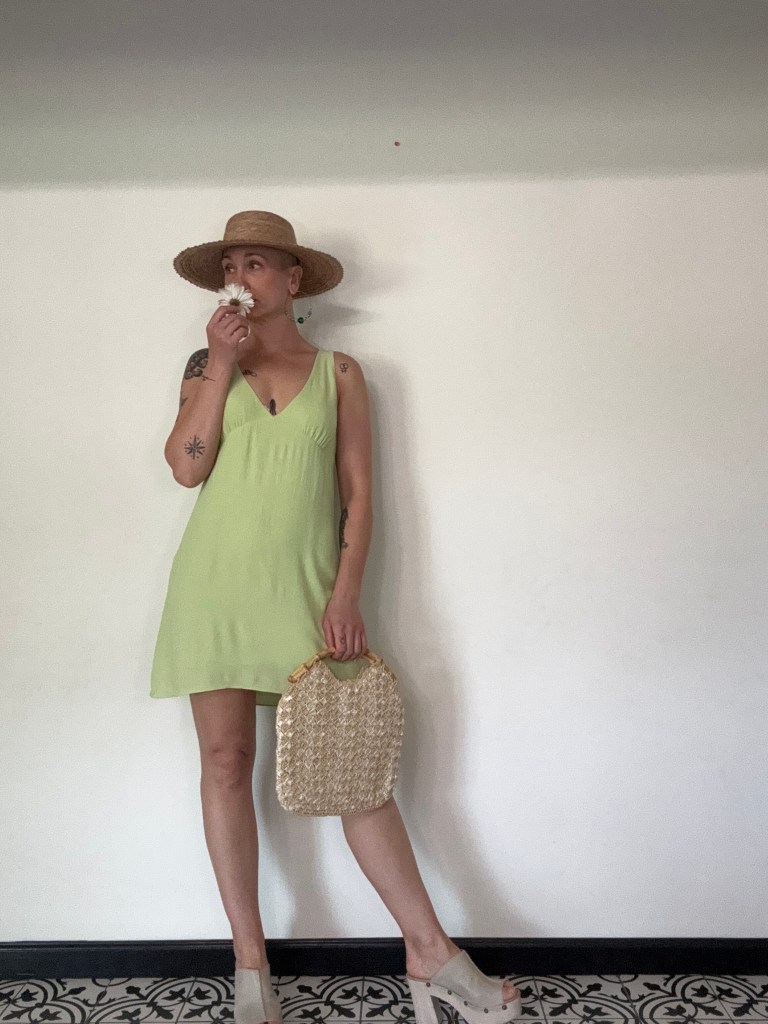

The sundress I’m wearing here is a thrifted piece made of viscose, which makes it lightweight and breathable—perfect for steamy summer days. While looking closely at the tag today, I noticed the lining is made from Lenzing Ecovero, which I discovered is an eco-friendlier version of viscose. It uses less water in its production and is processed in a closed-loop system, making it a much better choice for the planet.
I’ve styled the dress with:
- A pair of beaded hoop earrings I made myself
- Chunky platforms for a bit of lift and edge
- A tight-weave straw hat for sun protection
- A thrifted straw bag to finish the look with texture and cohesion
Outfit Two: Feminine & Flowing Midi Skirt Combo
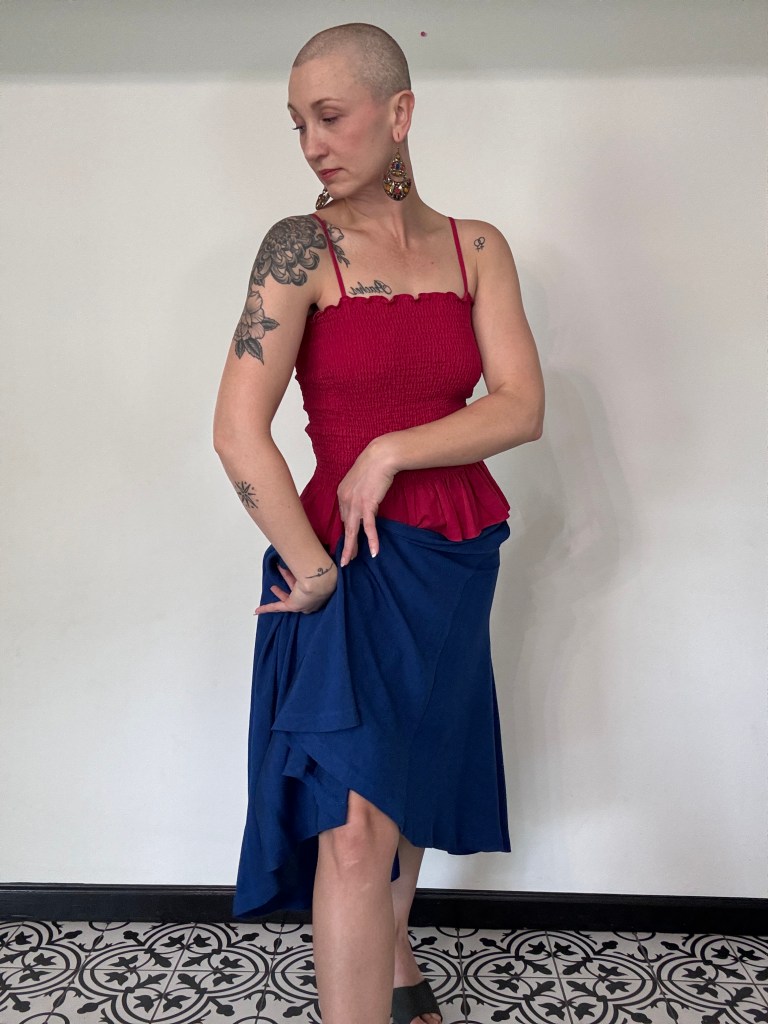
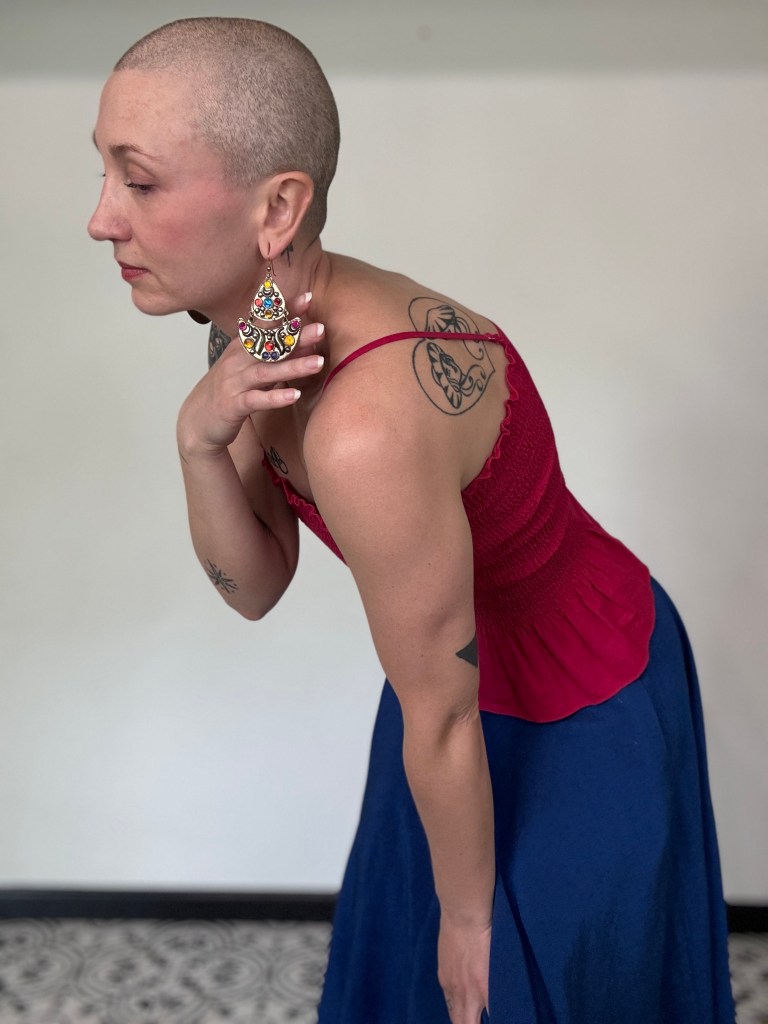
This outfit features a thrifted Liz Claiborne rayon midi-length skirt, which drapes beautifully and keeps air flowing. I paired it with a shirred linen/cotton blend top I found on Poshmark—it hugs the upper body just enough without clinging in all the wrong places. The breathable natural fibers make this outfit one of my most comfortable picks.
Finishing touch:
- Vintage earrings and shoes, both adding character and keeping with my commitment to low-impact fashion
Outfit Three: Gingham & Denim Statement
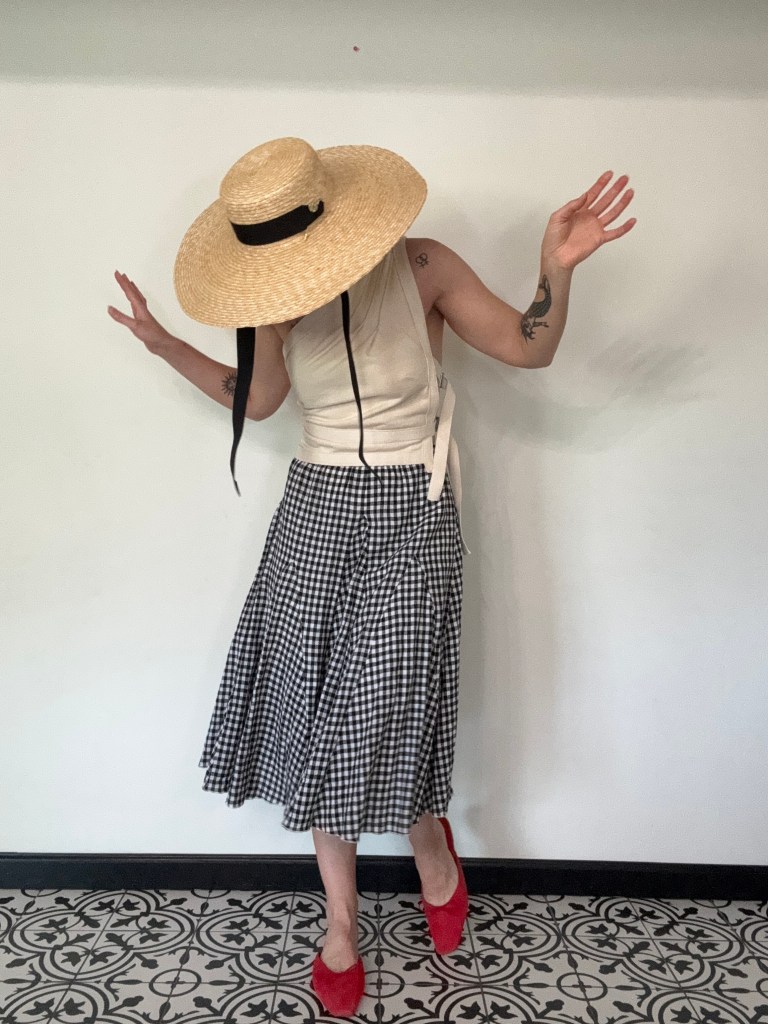
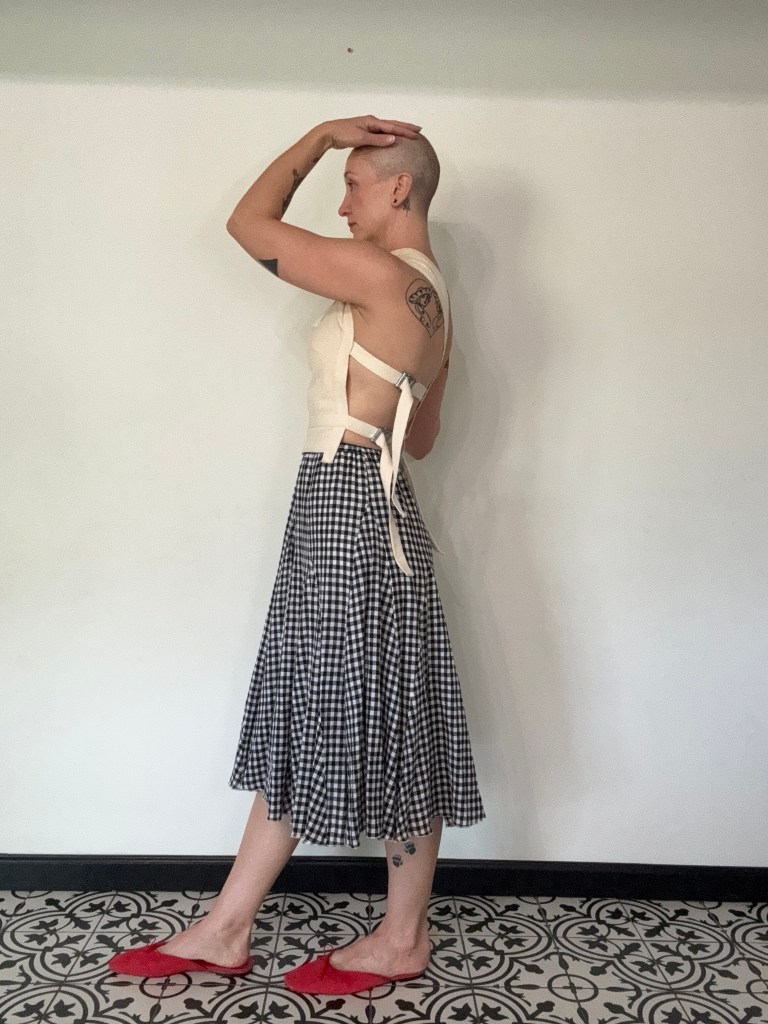
In this look, I’m wearing a flowy gingham skirt made of cotton—a classic pattern and an ideal fabric choice for warm weather. The top is a piece I made myself from reclaimed denim, giving it that structured look while still being breathable thanks to its cropped silhouette.
Accessories and intentional styling choices:
- A wide-brim straw hat to keep the sun at bay
- Simple flats I bought new last fall—a pop of red!
- No jewelry in this look—because the hat and denim top already offer enough visual texture, any additional detail around the head or neck would feel overwhelming. Sometimes, restraint is what makes a look sing.
Need Help Dressing for Your Climate + Lifestyle?
If you’re in the Austin area and interested in working with me one-on-one, head over to erinsimmonsstyling.com and book your free consultation. Whether you’re building a travel capsule or refining your everyday wardrobe, I’d love to support you.
Until next time, stay sustainable, intentional, and uniquely you. 💫
— Erin

 ERIN SIMMONS studio
Leave a comment