For a long time it felt like there were only two acceptable ways to dress.
You could be a maximalist. Loud prints, dramatic silhouettes, color layered on color.
Or you could be a minimalist. Beige sweaters, quiet neutrals, and a wardrobe so restrained it almost disappeared.
And for years I assumed that if my style didn’t neatly fit into one of those categories, it meant I hadn’t figured it out yet.
For years, when I opened Instagram, it felt like there were only two acceptable ways to dress.
On one side there was maximalism. Loud prints, dramatic silhouettes, layered textures, color everywhere. Outfits that seemed to announce themselves before the person wearing them had even spoken.
On the other side was minimalism. Various shades of beige. Quiet neutrals. Clean silhouettes. No accessories. No visual noise.
To be clear, both of these approaches have merit. I’m not against maximalism, and I own plenty of neutral basics. But for a long time I felt like I didn’t fit neatly into either camp.
And for a while I thought that meant my style wasn’t fully formed.
It turns out the problem wasn’t my style. The problem was the categories.
⸻
The Space in Between
My own style lives somewhere in the middle.
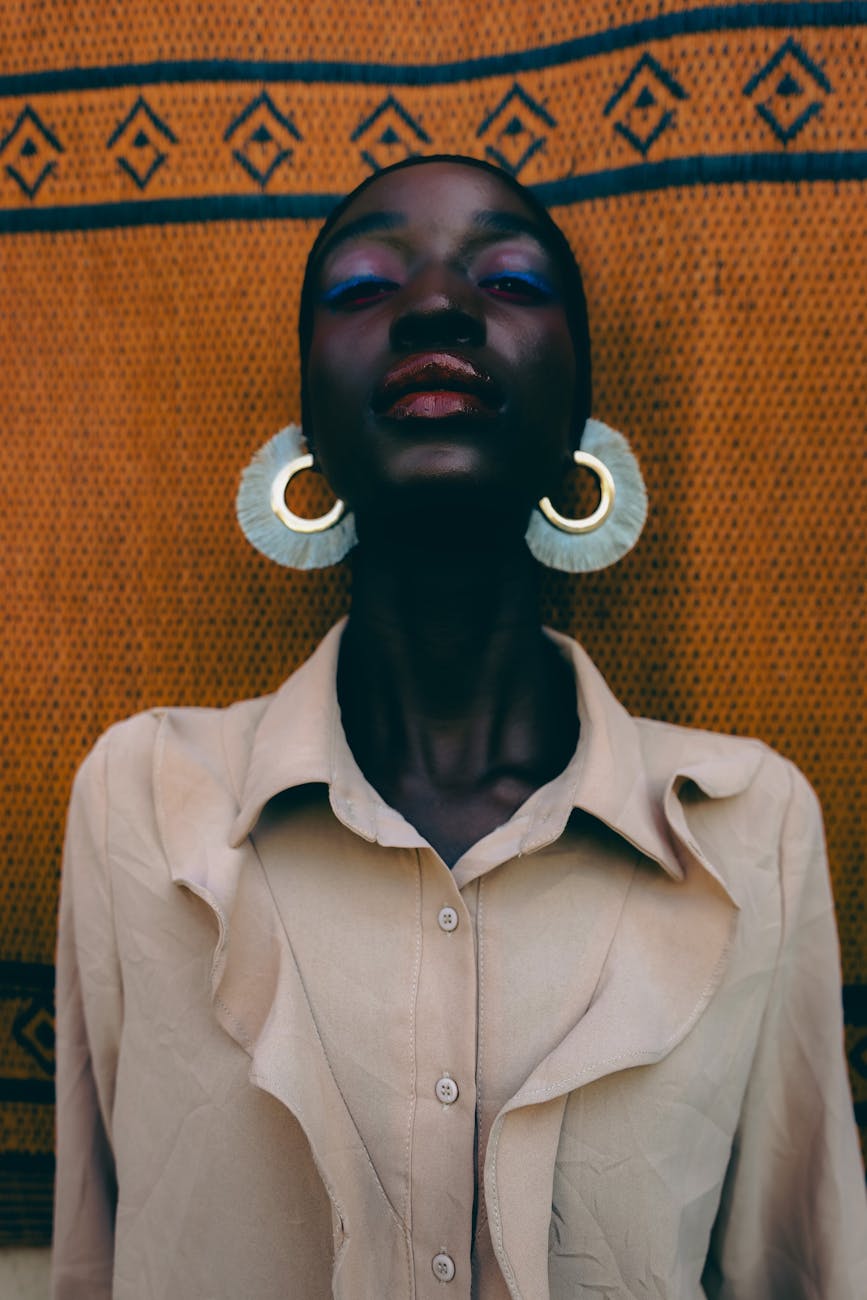
I like structure in an outfit. I like good basics. Neutral colors make up the backbone of my wardrobe. But I also love accessories.
I love interesting belts.
I love statement earrings. The more dramatic the better.
And I own shoes in nearly every color imaginable. Chartreuse. Cherry red. Cobalt blue.
At the same time, I never want my outfits to feel cluttered. Too many layers, prints, and textures quickly become overwhelming for me.
So most days I follow a simple rule:
One statement piece. The rest of the outfit creates depth.
That balance feels right for me.
Not maximalist.
Not minimalist.
Something closer to the middle.
Maybe we’ll call it mediumlism.
⸻
Appreciating Style That Isn’t Yours
Interestingly, some of the designers I’m most visually drawn to are known for maximalism.
Designers like Simone Rocha, Dries Van Noten, and Colina Strada push boundaries with color, volume, and print. Their garments tell stories. They experiment. They create pieces that make you pause and look again.
I deeply appreciate that work.
But appreciating something and wanting to wear it are two different things.
When I imagine putting those same combinations on my own body, I realize my style wants something quieter. More practical. More grounded in the rhythms of daily life.
At the opposite end of the spectrum are designers like Loro Piana and The Row, whose work sits firmly in the minimalist world.
While I respect the craftsmanship, that aesthetic often feels too restrained for me. I don’t need another neutral sweater. My closet already contains those pieces. And if I ever need more, there are thrift stores overflowing with them.
⸻
The Problem With Algorithmic Style
One thing I’ve noticed over time is how strongly social media pushes people toward clear categories.
Algorithms reward recognizable aesthetics. Maximalist. Minimalist. Cottagecore. Quiet luxury. Clean girl.
But real style rarely fits that neatly.
If we let the algorithm decide what we should wear, we eventually end up trying to force ourselves into a category that doesn’t quite feel like us.
⸻
Letting Style Become Personal
The more permission I gave myself to step away from those rigid categories, the better my style became.
I stopped trying to build outfits that fit a recognizable aesthetic. Instead, I focused on what actually felt good to wear.
The result was something that looked more like me.
I’ll probably always be drawn to wild prints and bold color combinations. Visually, I love them.
But when it comes to what I actually want to put on my body, my style lives somewhere else entirely.
And that’s okay.
Style doesn’t have to belong to a category.
Sometimes it just needs to belong to you.
 ERIN SIMMONS studio
Leave a comment